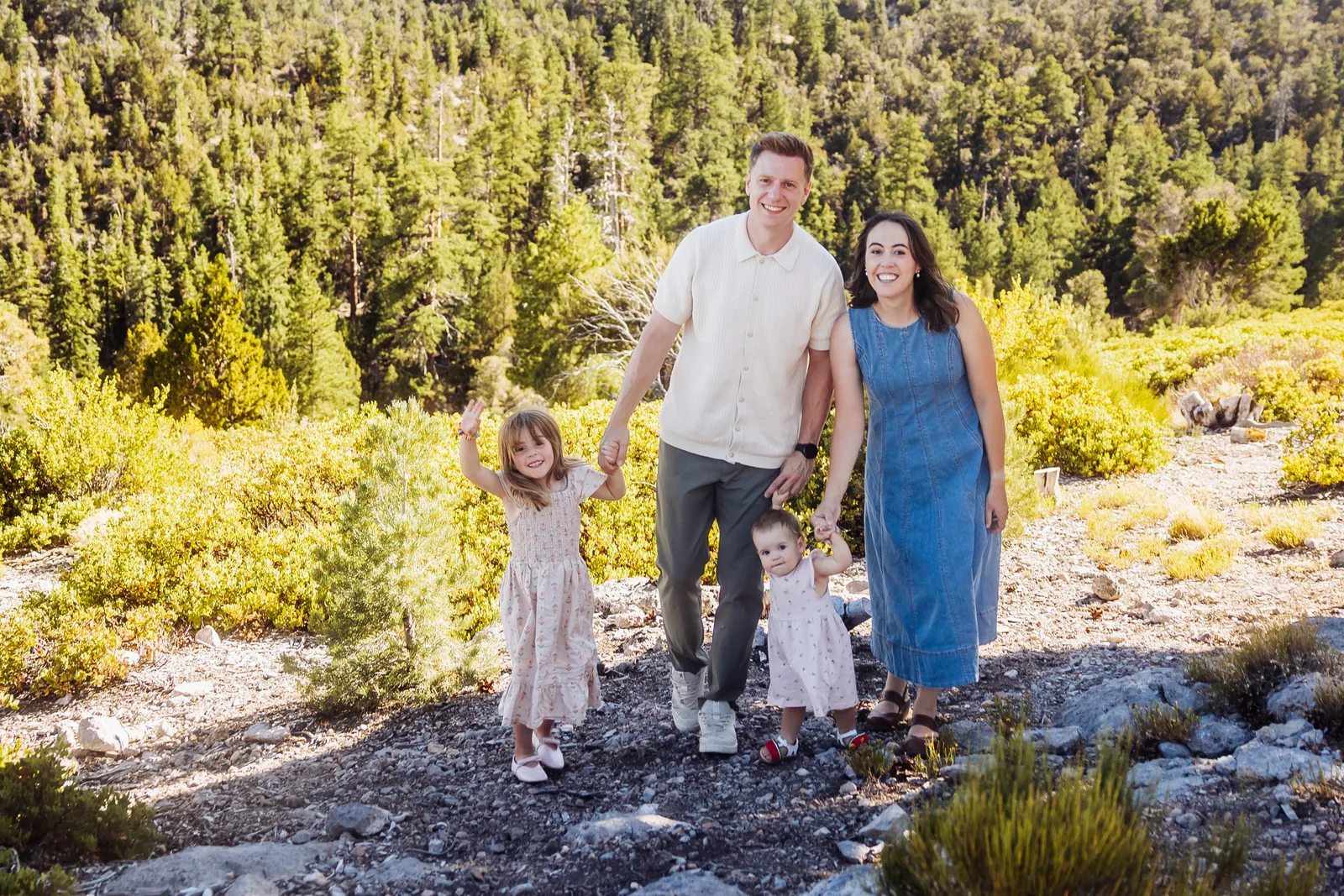
How Many Photos Do You Get From a Family Session?
The number is a fair question. It just doesn't tell you what your gallery will actually feel like.
The tally marks on this page count jobs a gallery does, and a good family gallery does five.
The question
The question behind the number
When families ask how many photos a session includes, they're usually trying to answer a different question: will I end up with enough good pictures? It's a reasonable thing to want to know before you book, and the number does help. It just tells you more when you read it with a few other details.
My family sessions run 60 minutes, and the finished photographs arrive in a private online gallery within 72 hours. You can see the current details on the family photography page. Here's how to read a photo count, from me or anyone else, and what to look for around it.
The count
What the number actually counts
A gallery count tells you how many finished images you receive. It doesn't tell you how many frames were taken during the session, and it shouldn't, because those are two different things. During any session a photographer takes many frames, and a good number of them are close variations of each other: the same grouping with slightly different expressions, a moment a second before or after the best one.
So when you see a number, ask what it counts: finished, edited photographs, or every frame from the session. A finished gallery is a selection from those frames, and once you know that, the next question is what you can do with it. Can you download the photographs and print them, or are they meant only for screens? Those answers change what the number means for you far more than the number itself does.
For my family sessions, I select and edit the photographs, then deliver the finished set in a private online gallery, ready to download, print, and share with the grandparents.
The cull
Why similar frames don't all make the gallery
It can feel counterintuitive to receive fewer frames than were taken, but a gallery with every near-duplicate can be harder to enjoy. If you have eight almost identical versions of the same photograph, choosing your favorite becomes a chore, and the strongest image can get lost among the rest.
Here's what that looks like in practice. These three frames came a few seconds apart, as a mother and her daughters walked across a footbridge at Tule Springs.
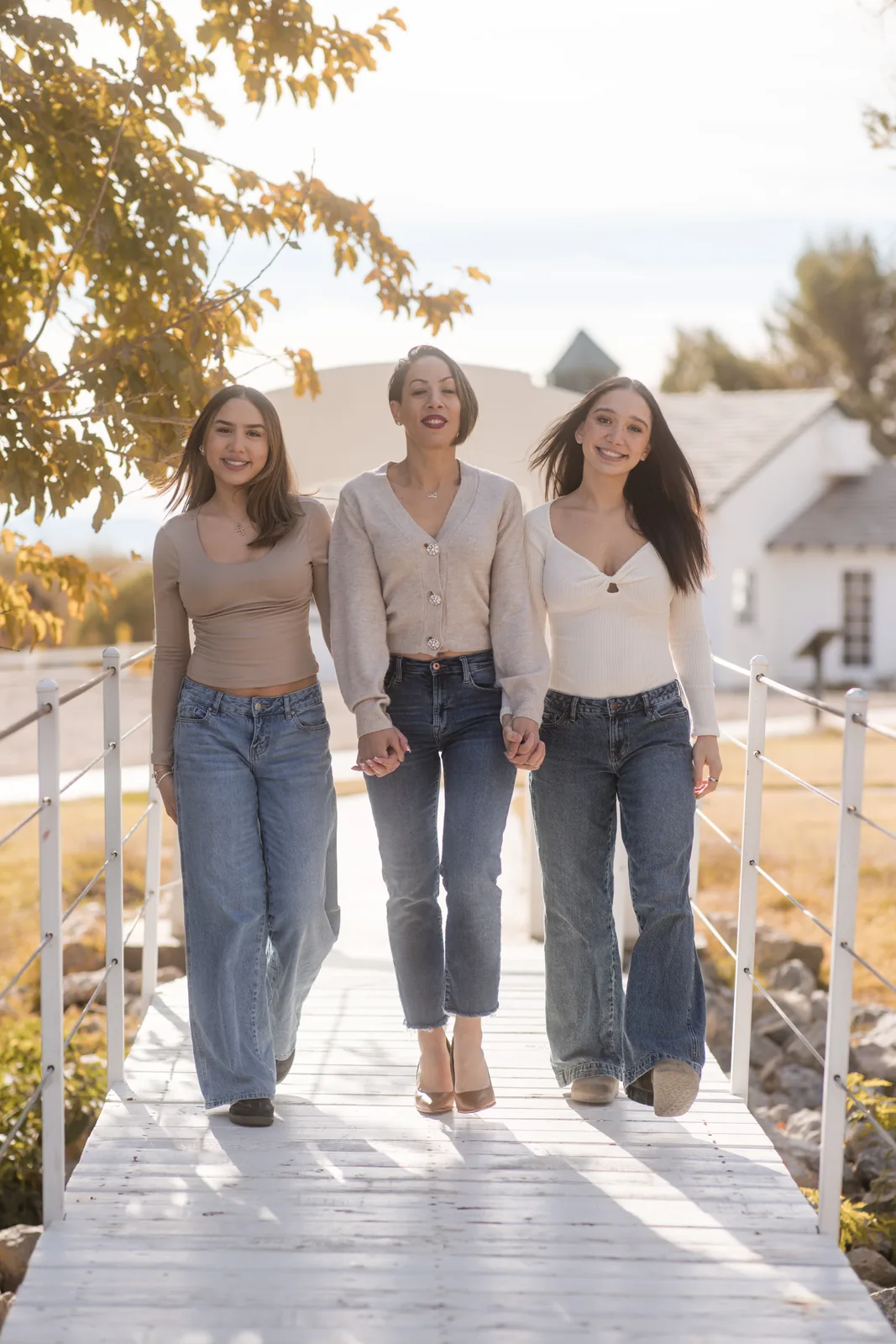
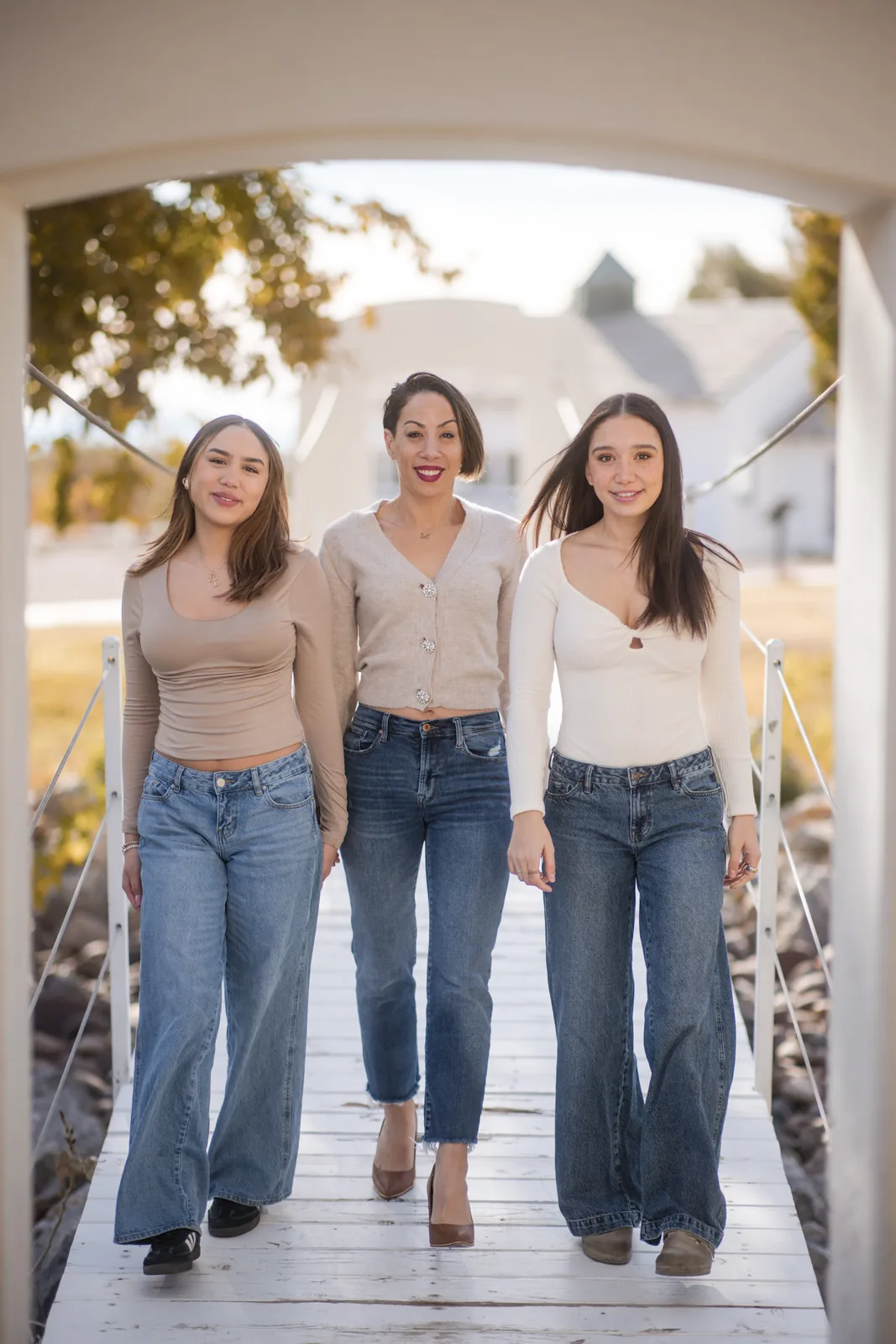
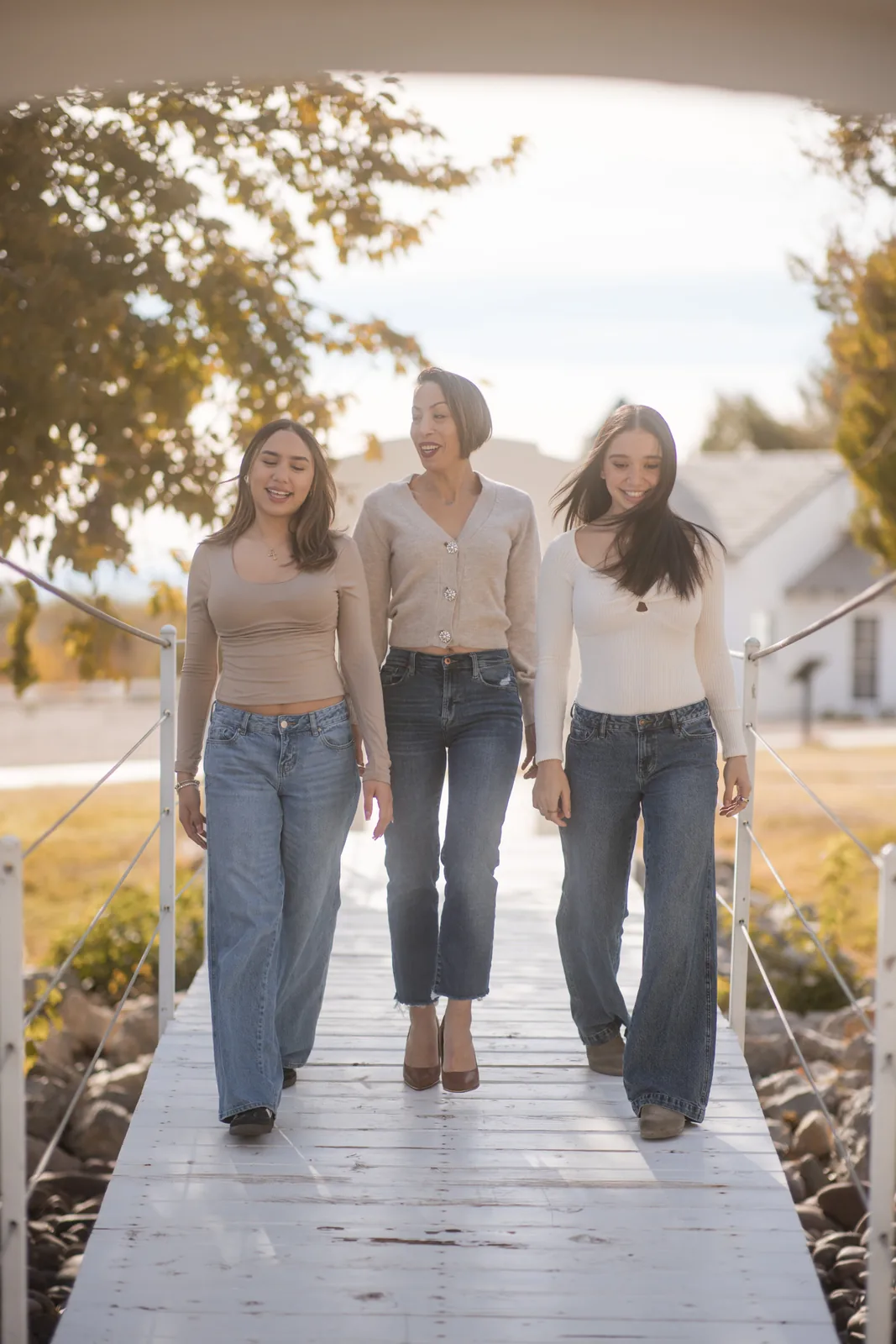
All three are good. Put all three in a gallery, though, and each one makes the others a little weaker, because your eye keeps comparing instead of looking.
Culling is the step where similar frames are compared and the best one is kept. Sometimes the difference is small, an open eye or a better hand position. Sometimes it's bigger, like the moment a child stopped fidgeting and looked up. The point is to give you the strongest version of each moment.
The comparison
Same count, two galleries
Imagine two galleries with the same number of images. In one, most of the pictures are the same grouping from the same angle with tiny changes. In the other, there's a full-family photograph, a few smaller combinations, some wider views that show the location, and some closer frames that show faces.
| Job | Gallery A | Gallery B |
|---|---|---|
| The whole family | 24 | 7 |
| Smaller combinations | 6 | 6 |
| Wider frames | 0 | 5 |
| Closer frames | 0 | 6 |
| In-between moments | 0 | 6 |
| Photographs | 30 | 30 |
| Jobs covered | 2 of 5 | 5 of 5 |
The second gallery is more useful even though the count is identical, and adding more photographs to the first one only gives you more of the same. That's why I think about a family session as a set of different jobs to cover. A useful gallery usually does five of them.
-
Job 1 of 5
The whole family
Everyone together, with a few options in case someone blinked. This is the photograph for the holiday card.

Summerlin -
Job 2 of 5
Smaller combinations
Each parent with the children, or the siblings on their own. These are the photographs that show the relationships inside the family.
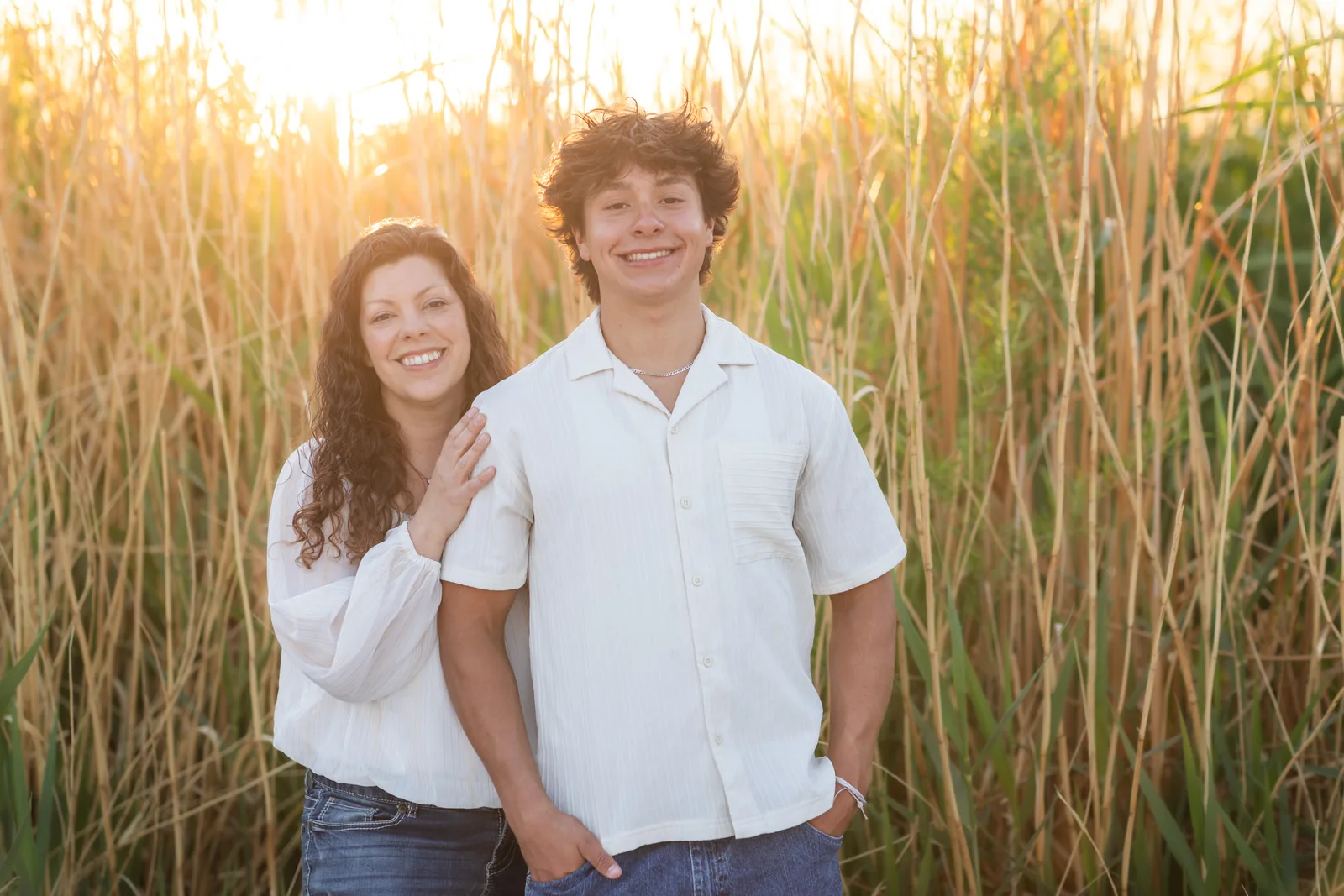
Las Vegas -
Job 3 of 5
Wider frames
The setting, and how your family fits into it. A wide frame gives a print room to breathe on a wall.
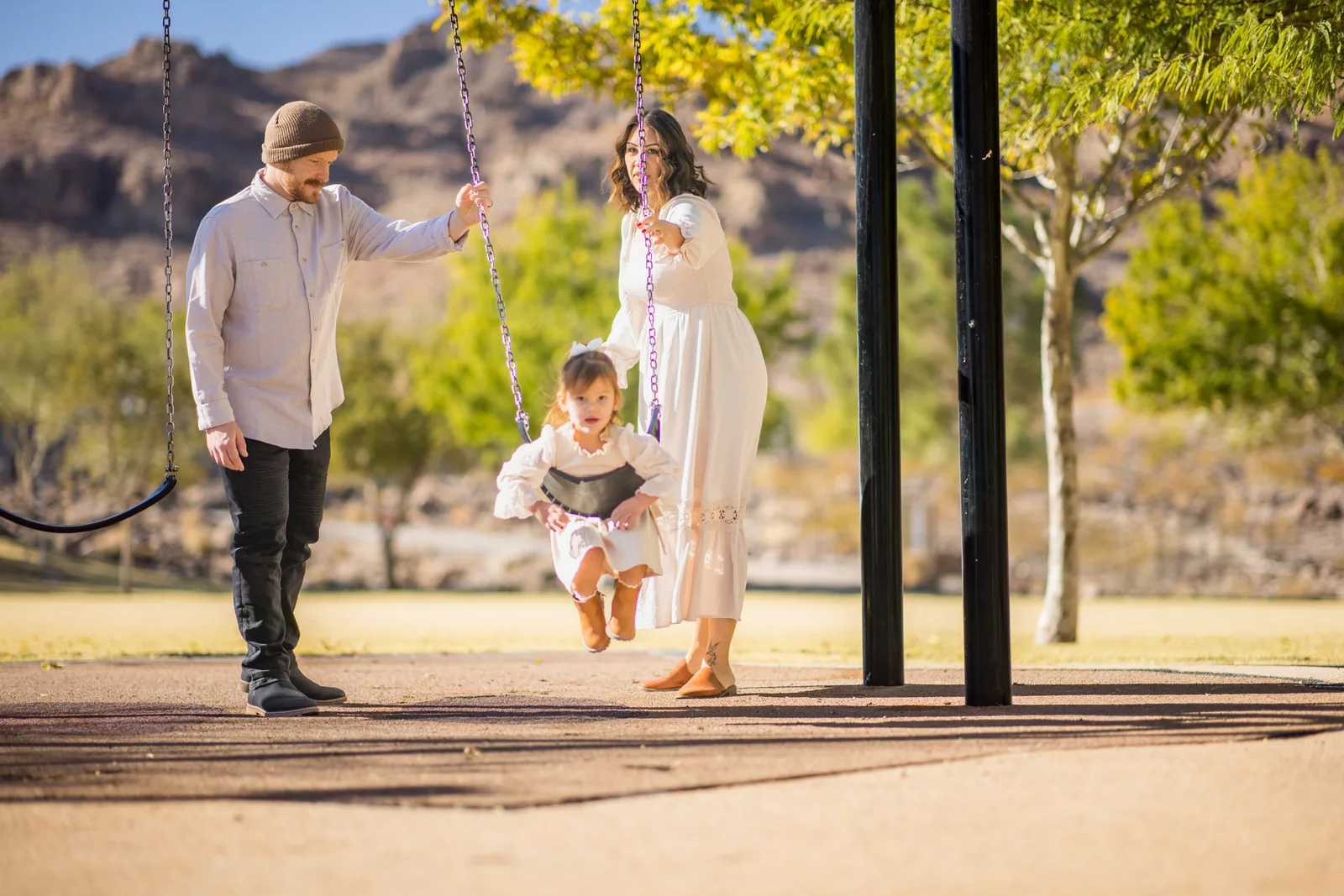
Henderson -
Job 4 of 5
Closer frames
Faces, expressions, and the connection between you, close enough that the background stops mattering.
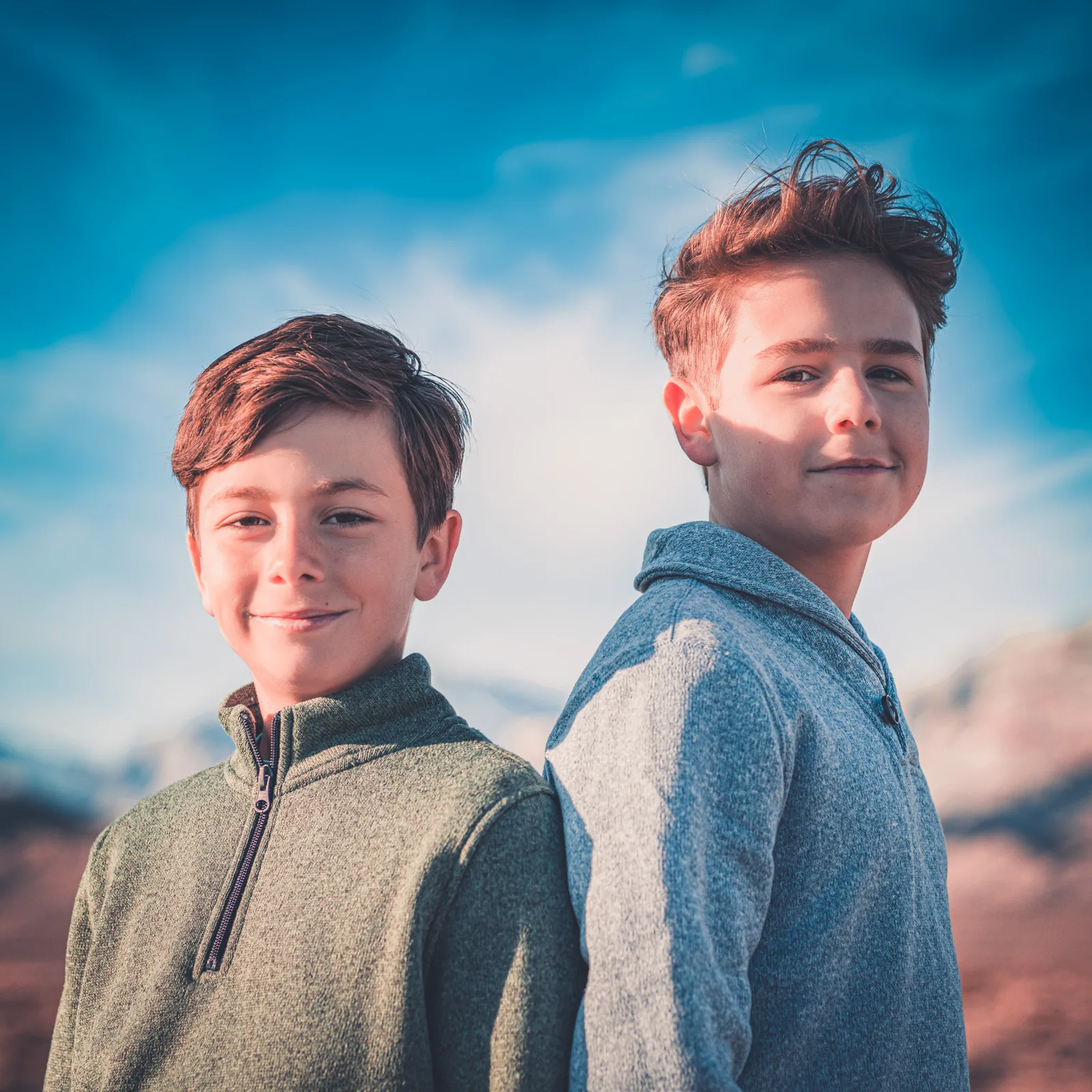
Kyle Canyon -
Job 5 of 5
In-between moments
The walking, talking, and laughing between the posed photographs. These are often the favorites, especially for families who feel awkward in front of a camera.
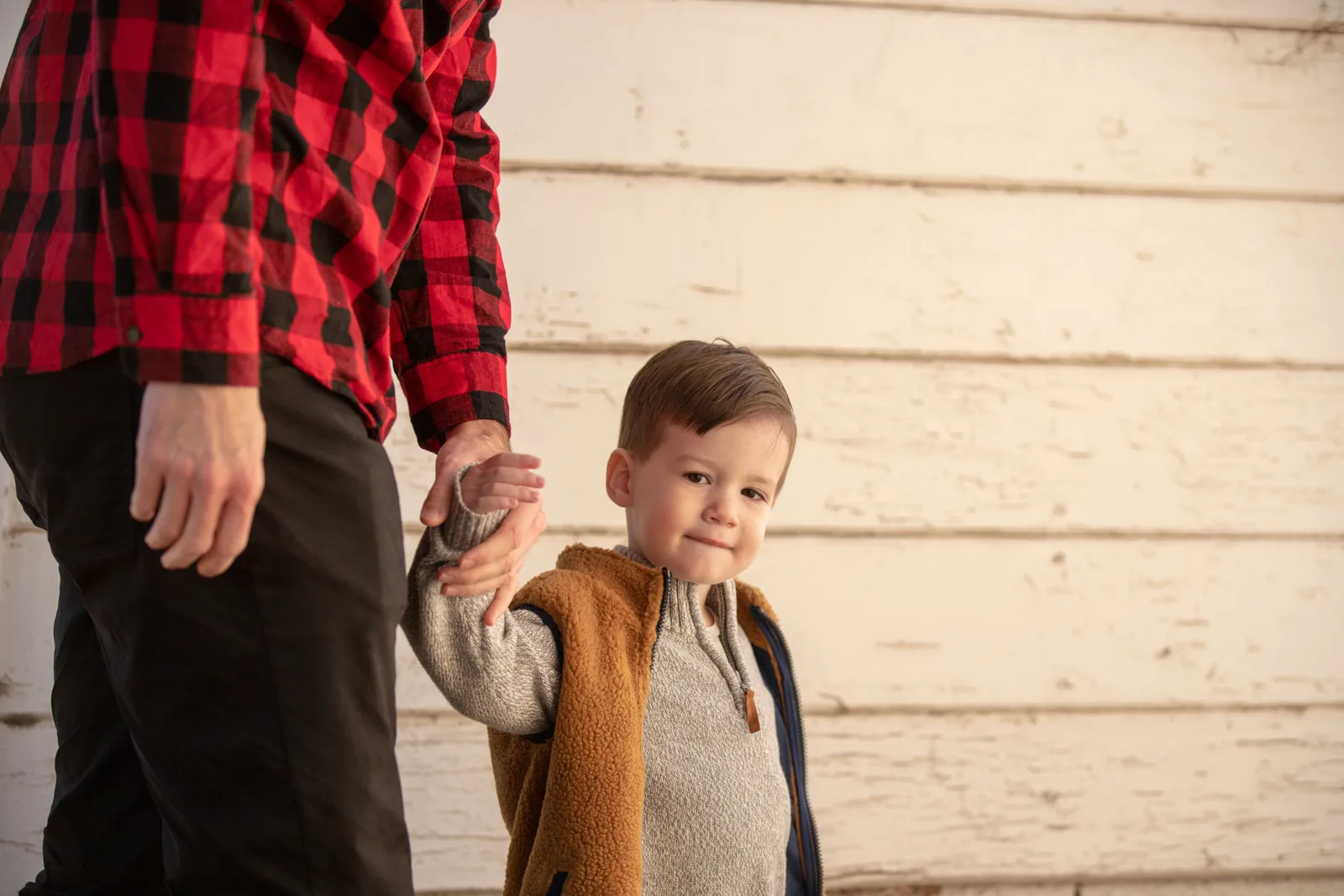
Tule Springs
When a gallery covers all five, you have the right photograph for each use, from a full-family shot for a holiday card to a close frame of just the kids.
A gallery count and a gallery you love are related, but they aren't the same thing.
The hour
What 60 minutes gives you to work with
Culling decides which frames you see. The session decides how much range there is to choose from. A family session runs 60 minutes, which is enough time to warm up, work through a couple of setups, and still leave room for breaks with younger kids.
The setups are where the different kinds of photographs come from, and the breaks are often where the in-between moments happen. With young children, a little preparation without pressure helps too.
If you're bringing extended family, tell me how many people will be joining. That helps us choose a comfortable location and talk about whether extra time is a good fit.
Before you book
How to use the count when you compare photographers
If you're comparing options, treat the number as one piece of information. The answers to a few plain questions will tell you more about value than the count alone.
- Does the number count finished, edited photographs or every frame?
- Do sample galleries show a range of groupings, wide frames, close frames, and unposed moments?
- Can you download the photographs and print them?
- When does the finished gallery arrive?
It also helps to look at real galleries. Browse the portfolio and notice how much variety a set of photographs contains: how many groupings, how many angles, and how many moments that weren't posed. If you see the range you want, the number becomes easier to trust.
If you're trying to work out overall value, my post on what a family photographer costs in Las Vegas walks through the other questions worth asking before you book.
Finally, think about how you'll use the photographs. A family who mostly shares images digitally and prints one or two favorites will look for different things in a gallery than a family planning a wall of prints. If prints are part of the plan, here's why I think printing them is worth it.
Quick answers
Common questions about gallery size
How many photos are included in a family session with you?
Family sessions run 60 minutes, and your finished, edited photographs arrive in a private online gallery within 72 hours. If you want a sense of gallery size for your family before you book, ask me. The family photography page has the current session details.
Do I receive every photo taken during the session?
No. Your gallery is a selection of finished, edited photographs. I compare near-duplicate frames and keep the strongest one, so you aren't sorting through several almost identical files.
Can I print the photos?
Yes. The finished photographs in your private online gallery are ready to download and print.